Quick answer: Ice dams form when heat escapes from your home's interior into the attic, melts snow on the upper roof, and the meltwater refreezes at the colder eaves. The dammed ice backs water up under shingles and into your walls and ceilings. In Minnesota, ice dams cause tens of thousands of dollars in interior damage every winter — and every one of them is preventable.
What is an ice dam?
An ice dam is a ridge of ice that forms at the edge of a roof, usually at or just above the eaves, that prevents melting snow from draining off the roof. The meltwater pools behind the dam and eventually backs up under shingles — dripping into the attic, then down through walls and ceilings.
From the outside, an ice dam looks like a thick ridge of ice along your roof edge, often with large icicles hanging off the gutters. From the inside, the first signs are water stains on ceilings or walls — usually near exterior walls or in upstairs corners.
Why Minnesota homes get ice dams
Ice dams require three things: snow on the roof, an upper roof surface above 32°F, and an eave surface below 32°F. Minnesota winters provide the weather. Your house provides the rest — and specifically, three common house problems are responsible for nearly every Minnesota ice dam we see:
- Insufficient attic insulation. Heat escapes from the living space into the attic, warms the underside of the roof deck, and melts snow above.
- Air leakage from the living space into the attic. Recessed can lights, attic hatches, plumbing stacks, and unsealed top plates leak warm air into the attic space — often a bigger factor than insulation depth alone.
- Inadequate attic ventilation. If the attic can't exhaust warm air through ridge and soffit vents, temperatures rise and the roof deck heats up.
The result: warm upper roof, cold eaves, snow melts up top, refreezes at the eaves, ice dam forms. Repeat every day until something gives — usually your drywall.
What a home inspector looks for (on every Minnesota inspection)
When I inspect a home in Austin, Rochester, Albert Lea, or anywhere in southeast Minnesota, here's what I check specifically for ice dam risk:
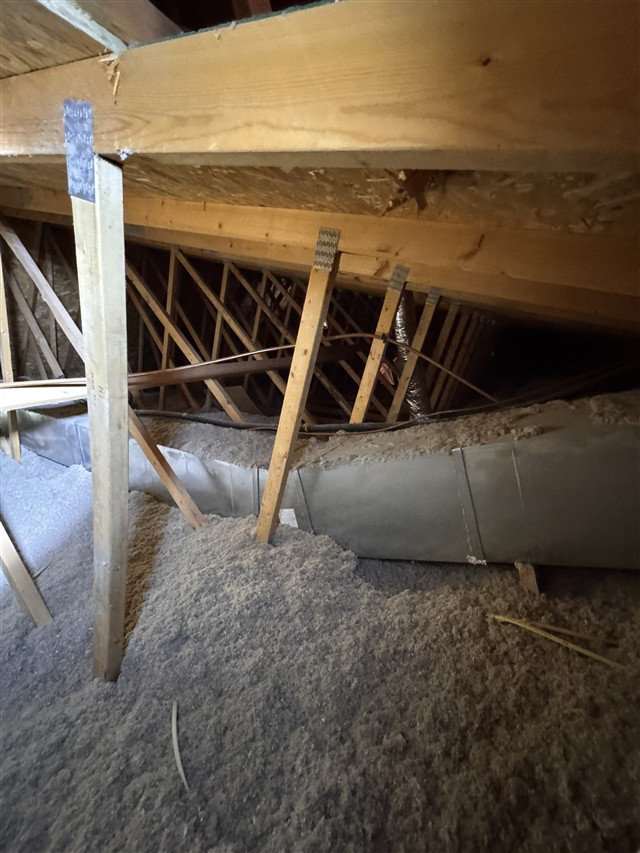
- Attic insulation R-value and depth. Minnesota code for new construction is R-49 in the attic, but most older homes top out at R-19 or R-30. If you see less than 12 inches of blown insulation, the attic is under-insulated by current standards.
- Air sealing at top plates and penetrations. We look at the top of every interior wall and every plumbing, electrical, or duct penetration through the attic floor. Unsealed gaps are ice dam factories.
- Recessed can lights. Old non-IC-rated cans leak warm air directly into the attic. We note whether they've been capped with insulation boxes.
- Attic hatch insulation and weatherstripping. A bare plywood attic hatch can leak more heat than the rest of the attic combined.
- Ridge and soffit vent balance. The attic should have roughly equal intake (soffit) and exhaust (ridge or gable) ventilation. One without the other doesn't work.
- Evidence of past ice dam damage. Water stains on attic sheathing, dark streaks at eaves, bowed or delaminated OSB, stained ceilings along exterior walls.
- Ice and water shield. Current code requires ice and water shield to extend at least 24 inches past the interior wall line at eaves. We check whether the visible section of roofing membrane goes back far enough.
- Bathroom and kitchen vent fan termination. These absolutely must vent to the exterior — not into the attic. Moist warm air into an attic is an ice dam accelerant and a mold problem.
How to prevent ice dams
Prevention is always cheaper than repair. In order of cost-effectiveness:
- Air-seal the attic floor. This is #1. Seal every penetration — plumbing stacks, electrical, duct chases, top plates — with spray foam or caulk. Many Minnesota utilities offer rebates for air sealing.
- Add insulation. Bring the attic up to R-49 (about 14–16 inches of blown cellulose or fiberglass). Xcel Energy offers rebates in most of southeast Minnesota.
- Install baffles at the eaves. These keep insulation from blocking soffit airflow so the attic can breathe.
- Ensure balanced ventilation. Ridge vent plus soffit vents is ideal. Gable vents alone aren't enough in most cases.
- Cap recessed lights. Replace non-IC-rated cans with IC-airtight fixtures or install airtight boxes over them.
- Heat cables as a last resort. They help in isolated problem areas but treat the symptom, not the cause. Don't use them instead of air sealing and insulation.
What to do if you already have an ice dam
If you discover an ice dam mid-winter:
- Don't chip it off. You'll damage shingles and make the roof worse. Aggressive ice removal is a common cause of roof leaks that ironically look like ice dam damage.
- Don't climb the roof in winter. Minnesota roofs in February are death traps. Stay off.
- Use a roof rake from the ground to pull snow off the first 3–4 feet of the eaves. Removing the snow supply stops the dam from growing.
- Calcium chloride in a nylon stocking, laid perpendicular to the dam, will melt a channel for water to drain.
- Call a professional ice dam removal service that uses low-pressure steam — never mechanical chipping.
- In spring, address the underlying cause. Air seal, insulate, ventilate. Otherwise you'll have the same problem next winter.
When to call an inspector
If you're buying a Minnesota home and you want to know whether ice dams are likely — or whether past ice dam damage is hiding somewhere — a professional home inspection with FLIR thermal imaging is the gold standard. Thermal imaging shows heat loss patterns in the attic and on the roof surface that predict exactly where ice dams will form. It also reveals hidden moisture from past leaks that may not show up in a visual inspection.
If you already own the home and want to prevent ice dams this winter, schedule an attic audit before the first heavy snow. We can tell you exactly what's wrong with your insulation, air sealing, and ventilation — and what to fix first for maximum impact.
Schedule an Inspection
InterNACHI Master Certified. FLIR thermal imaging included on every inspection. Serving Austin, Rochester, Albert Lea, Owatonna, Mason City, and all of southeast Minnesota.
📞 507-721-3771Related reading: Attic Inspection • FLIR Thermal Imaging • Roof Inspection • Home Energy Audit